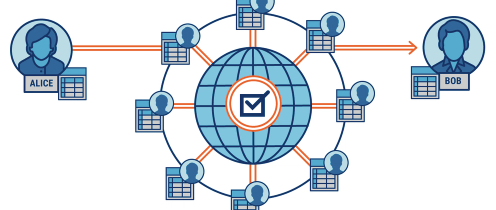
Blockchain finality denotes irreversible settlement within a given consensus. It depends on the guarantees of the chosen mechanism—PoW, PoS, or BFT-like protocols—shaping when opinions stabilize. Liveness, security, and scalability trade-offs constrain the finality window and adversarial resilience. Real-world signals, such as cross-node confirmation consistency and bounded finality, distinguish transient states from true irreversibility. For developers, modeling timing, governance, and finality bounds is essential to produce robust outcomes, but questions remain about practical thresholds and guarantees.
What Is Blockchain Finality and Why It Matters
Blockchain finality is the point at which a transaction, once included in a block and extended by subsequent blocks, is deemed irreversible and beyond practical reversal in the network’s consensus constraints. The concept formalizes finality definitions and underpins trust in decentralized systems. Stake finality, as a variant, ties irreversibility to stake-based validation, reinforcing principled, liberty-aligned security guarantees.
How Different Consensus Mechanisms Shape Finality
Different consensus mechanisms impose distinct requirements and guarantees that directly shape how finality is achieved and perceived. The analysis compares proof-of-work, proof-of-stake, and BFT-like protocols, emphasizing tradeoffs between liveness, security, and scalability.
These tradeoffs influence when opinions become stable. Recognizing consensus tradeoffs clarifies the boundaries of finality guarantees, revealing how protocol choices constrain fault tolerance, block confirmations, and exposure to adversarial reorganizations.
Real-World Signals of Finality You Can Trust
What constitutes reliable signals of finality can be assessed by isolating observable certainties from transient states? Real-world indicators include bounded finality windows and consistent block finality across synchronized nodes, reflecting network resilience.
Finality latency measures delay until irreversibility is statistically assured. Economic incentives, such as stake slashing, align validator behavior with long-term assurances, reducing relapse risk and heightening trust in protocol stability.
Pitfalls, Misconceptions, and Practical Guidelines for Developers
Developers often encounter a landscape of subtle misalignments between theoretical guarantees and operational realities, where pitfalls arise not from faulty math but from implementation choices, assumptions, and external dependencies.
This discussion emphasizes Latency misconceptions and fork resilience, clarifying that robustness emerges from disciplined engineering, rigorous verification, and explicit modeling of network partitions, adversarial timing, and governance rules within finality proofs and practical deployments.
See also: Understanding Blockchain Architecture
Frequently Asked Questions
How Does Finality Interact With Forks in Fast-Moving Networks?
Finality vs forks presents tension in fast networks; eventual confirmation stabilizes state, though fork depth and orphan rates influence practical finality. Shard configs impact concurrency and cross-shard finality, altering latency and resilience in dynamic conditions.
Can Finality Guarantees Vary Across Different Shard Configurations?
Finality variance exists across shard configurations, as different architectures yield distinct confirmation guarantees; thus, finality variance is intrinsic to shard configuration, reflecting trade-offs between throughput, security, and liveness in multi-shard networks.
What Are Typical Latency Thresholds for Practical Finality?
Latency thresholds for practical finality vary by protocol, but typical targets range from seconds to a few minutes, influenced by network assumptions and fault tolerance; rigorously, one seeks low-latency guarantees under adversarial models while preserving safety.
How Do Incentives Influence Finality Reliability in Practice?
Incentive misalignment reduces finality reliability, as agents prioritize transient gains over long-term stability; reward decay dampens egoistic behavior, aligning interests toward robust confirmation. Theoretically, mechanisms must sustain cooperative equilibria despite abstract freedom-driven incentives.
Is Probabilistic Finality Ever Indistinguishable From Absolute Finality?
On balance, probabilistic finality cannot be indistinguishable from absolute finality; thresholds matter. Finality vs. certainty depends on the stochastic model, convergence probability, and adversarial assumptions, shaping perceived finality as probabilistic tails approach certainty thresholds.
Conclusion
Finality in blockchain is the point at which a transaction becomes irreversibly settled under the protocol’s guarantees. Different consensus mechanisms impose distinct bounds on finality latency, security assumptions, and liveness. Real‑world signals—bounded finality windows, cross‑node confirmations, incentive alignment—help distinguish transient states from true irreversibility. Developers must model adversarial timing, governance, and finality windows to ensure verifiable outcomes. Given these constraints, is a universally uniform notion of finality even coherent across diverse systems?