Blockchain architecture frames how a distributed ledger stores data, validates transactions, and synchronizes state across nodes. It hinges on core components—nodes, blocks, and networks—that define latency, governance, and consensus. The design must balance scalability, privacy, and interoperability through standardized interfaces and composable protocols. Real-world choices reflect trade-offs among security, throughput, and control. The result is an auditable, resilient ecosystem with evolving cross-chain capabilities, inviting further scrutiny into how each decision shapes future collaboration.
What Is Blockchain Architecture and Why It Matters
Blockchain architecture defines the structural blueprint of a distributed ledger system, outlining how data is stored, validated, and synchronized across nodes. It frames systemic decisions about privacy models and data availability, guiding how parties trust the chain without central authority. The design influences consensus mechanisms, resilience, and security implications, shaping scalable, transparent ecosystems that empower freedom while maintaining rigorous accountability and interoperability.
Core Components: Nodes, Blocks, and Networks Explained
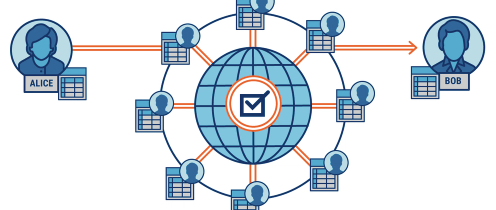
Nodes, blocks, and networks form the core scaffolding of a distributed ledger system: nodes maintain copies of the ledger, blocks group validated transactions into immutable units, and networks coordinate communication to ensure consistency across participants.
The architecture emphasizes edge latency considerations and robust consensus governance, enabling resilient, scalable operation while preserving decentralization, traceability, and auditable decision-making across diverse participants.
Balancing Scalability, Privacy, and Interoperability
The analysis frames scalability tradeoffs as structural realities, not abstractions, and treats privacy vs. throughput as a design variable rather than a fixed constraint.
Interoperability emerges through standardized interfaces, governance clarity, and composable protocols, enabling resilient, freedom-oriented ecosystems.
Real-World Architecture Choices Across Platforms
Across platforms, architectural choices manifest as a spectrum of trade-offs among security, throughput, and governance. Real-world designs embody privacy preserving techniques, enabling selective disclosure without sacrificing decentralization.
Cross chain interoperability remains essential for composability, while scalability tradeoffs guide state and throughput limits. Governance models vary, balancing stakeholder influence with automation, risk controls, and resilience to adversarial dynamics across diverse ecosystems.
See also: AI in Digital Advertising
Frequently Asked Questions
How Does Blockchain Handle Bad Actors in Mixed Networks?
In mixed networks, governance beyond voting constrains bad actors through transparent rules, incentives, and cryptographic security. A systemic approach detects anomalies, isolates offenders, and preserves consensus integrity, empowering participants toward resilient, freedom-enhancing collaboration despite malicious attempts.
What Are the Long-Term Costs of On-Chain Data Growth?
On chain data growth scales with block size and frequency, imposing long term costs on storage, bandwidth, and governance beyond voting. Real time applications and cross border smart contracts face legal implications, shaping scalability, governance, and sustainable innovation.
Can Blockchain Improve Governance Beyond Voting Systems?
Blockchain can improve governance beyond voting systems by enabling transparent, auditable decision processes, incentive-aligned participation, and decentralized leadership. This enables blockchain governance frameworks that continuously adapt, fostering resilient institutions while preserving individual freedom and collective accountability.
How Do Consensus Delays Impact Real-Time Applications?
Consensus delays degrade real-time applications; this is supported by theories about distributed agreement. The analysis notes consensus jitter and latency sensitivity, urging architecture that tolerates turbulence while preserving determinism, scalability, and user autonomy in dynamic environments.
What Are Legal Implications of Cross-Border Smart Contracts?
Cross border contracts face complex legal risk; international enforcement hinges on harmonized standards and clear dispute mechanisms, while cross jurisdiction compliance must align with evolving regulatory frameworks to preserve autonomy and reduce exposure in cross-border transactions.
Conclusion
In the ledger’s orbit, architecture acts as gravity—guiding data, trust, and collaboration across distant nodes. A disciplined blueprint decouples speed from certainty, privacy from openness, and interoperability from isolation, enabling resilient ecosystems to endure forks and failures. As networks scale, governance and standards crystallize into a lattice of predictable interfaces and composable protocols. The future of blockchain hinges on structural clarity, principled trade-offs, and relentless rigor, forging trustworthy platforms where decentralized ideas converge into auditable reality.