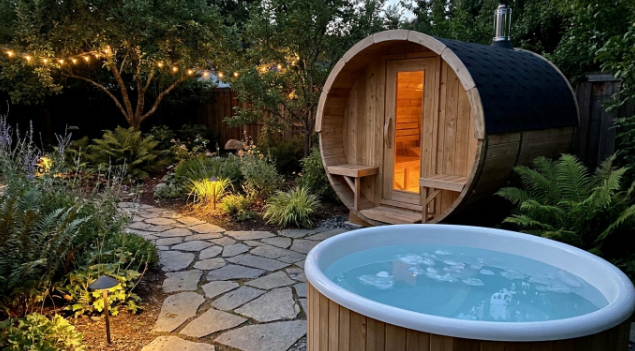
For a 6-person sauna, electric heat is the more practical choice for daily household use because it holds a set temperature without attention and starts with a switch, while wood heat suits buyers who want a slower, hands-on ritual or lack access to a 240-volt circuit. Electric heaters sized for six adults typically run 9 to 12 kilowatts and reach 170 degrees in 30 to 45 minutes. A comparable wood stove needs 45 to 75 minutes and steady tending. Neither is wrong; the right pick depends on how often the cabin gets used and who is doing the loading.
How Does Heat Output Change Once You Scale to Six People?
A 6-person cabin usually falls between 300 and 380 cubic feet once you account for an 8-foot-square footprint and a 6.5 to 7-foot ceiling. That is roughly double the volume of a compact 2-person unit, and heat load does not scale in a straight line with floor space. Six adults sitting on two tiers of benches add real humidity and body heat, and the door opens and closes more often during a group session than a solo one. Manufacturers generally recommend sizing about 15 to 20 percent above the standard cubic-footage chart for any cabin regularly used at full capacity, whether the heater is electric or wood.
See also: The long-distance cricket fan’s second screen
What Does an Electric Heater Actually Deliver Day to Day?
An electric heater for a room this size is usually a floor-standing or corner unit in the 9 to 12 kilowatt range, controlled by a digital panel with a timer and thermostat. The draw for six people is fast, even recovery: the heater cycles on and off to hold temperature within a couple of degrees, so the last person in gets close to the same experience as the first. Rocks sit in a cage on top, and pouring water over them produces löyly, the burst of steam traditional Finnish bathing is built around. The tradeoff is installation. A heater in this range needs a dedicated 240-volt, 40 to 60-amp circuit, and many homes need panel work before that circuit exists.
What Does a Wood-Fired Stove Change About the Session?
A wood stove sized for a 6-person cabin, generally rated for 500 to 700 cubic feet of firebox capacity, produces a different heat entirely: drier at first, then a rolling wave of steam once water hits the rocks, with more variation session to session based on wood species and how well it is seasoned. There is no thermostat, so the person tending the fire is managing draft and reload timing by feel. That is part of the appeal for a lot of buyers, particularly at a cabin or rural property where the sauna is a weekend event rather than a Tuesday-night habit. A wood stove also needs a code-compliant chimney with proper clearance to the roofline and combustible materials, plus a covered, dry place to store split wood near the door.
Which Setup Costs Less Over Time?
Purchase price is close for comparable build quality, generally $3,500 to $7,000 for the heater or stove alone before installation. Running costs diverge. Electric heat at 10 kilowatts for a one-hour session, four times a week, lands around $15 to $30 a month depending on local utility rates. Wood is close to free if you already have a fuel source, but factor in the time spent splitting, stacking, and drying wood, plus periodic chimney cleaning that a code inspector or insurer will expect on a documented schedule. Installation is usually the bigger swing: an electrical run for a 9 to 12 kilowatt circuit commonly costs $800 to $2,500 depending on distance from the panel, while a compliant wood stove chimney installation runs a similar range or more depending on roof penetration and local permitting.
Which One Fits a Household That Uses the Sauna Most Nights?
For a cabin that gets used several nights a week by a family or a couple with kids, electric heat generally wins because the switch-and-go convenience matters more than the ritual once the novelty wears off. Retailers such as Almost Heaven, Dundalk Leisurecraft, and SweatDecks list 6-person electric models with heaters already matched to cabin volume, which removes the guesswork of pairing a stove to a space on your own. A wood stove earns its keep at a property used more seasonally, where the extra 20 to 30 minutes of prep is part of the point rather than friction against a weeknight schedule.
What Ventilation Does a Larger Cabin Need Either Way?
Both heat sources depend on the same airflow principle: a low intake vent near the heater and a higher exhaust vent on the opposite wall, sized larger for a 6-person room than for a 2-person unit because more bodies consume more oxygen and produce more moisture per session. Undersized ventilation is a common reason a 6-person cabin feels stuffy or slow to heat evenly across both bench tiers, regardless of whether the heat source is electric or wood. Confirm the vent sizing the manufacturer specifies for the model’s actual cubic footage rather than assuming a smaller unit’s spec sheet still applies.
What Does the Research Say About Regular Sessions?
The heat source does not change the underlying physiological response once the room reaches target temperature. A 2018 review in Mayo Clinic Proceedings summarized cardiovascular associations linked to regular sauna bathing, and a separate systematic review in Evidence-Based Complementary and Alternative Medicine reported comparable findings across dry sauna studies. An older review in The American Journal of Medicine outlined both benefits and known risks, including contraindications like unstable angina or recent heart events. These are population-level associations from mostly Finnish cohorts, not a guarantee for any individual, and anyone with a cardiovascular condition should raise sauna use with a doctor before buying either type of heater.
Frequently Asked Questions
Is electric or wood heat better for a 6 person sauna? Electric is the better default for most households because it holds steady temperature automatically and needs no fuel storage. Wood suits buyers who want the ritual of tending a fire or lack access to a 240-volt circuit.
How big a wood stove does a 6 person sauna need? Most cabins in the 300 to 380 cubic foot range need a stove rated for roughly 500 to 700 cubic feet of continuous-use capacity.
How long does it take to heat a 6 person sauna? An electric heater sized correctly typically reaches 170 degrees in 30 to 45 minutes. A comparable wood stove usually needs 45 to 75 minutes.
Do I need a 240-volt circuit for an electric 6-person sauna heater? Almost always. Heaters sized for six adults typically draw 9 to 12 kilowatts, which requires a dedicated 240-volt circuit and often a subpanel upgrade.
References
- Cardiovascular and Other Health Benefits of Sauna Bathing: A Review of the Evidence, Mayo Clinic Proceedings, 2018
- Clinical Effects of Regular Dry Sauna Bathing: A Systematic Review, Evidence-Based Complementary and Alternative Medicine, 2018
- Benefits and risks of sauna bathing, The American Journal of Medicine, 2001
By Nathan Pierce